


Fugit, sed quia consequuntur magni dolores eos qui ratione voluptatem sequi nesciunteque porro quisqu dolorem ipsum quia dolo sit amet, consectetur, adipisci…
Note: Direct monitoring data is unavailable for this specific postcode. We are displaying the most recent data from the nearest monitoring station [Station Name] which shares your water source.
Water Contamination Risk Report for Postcode
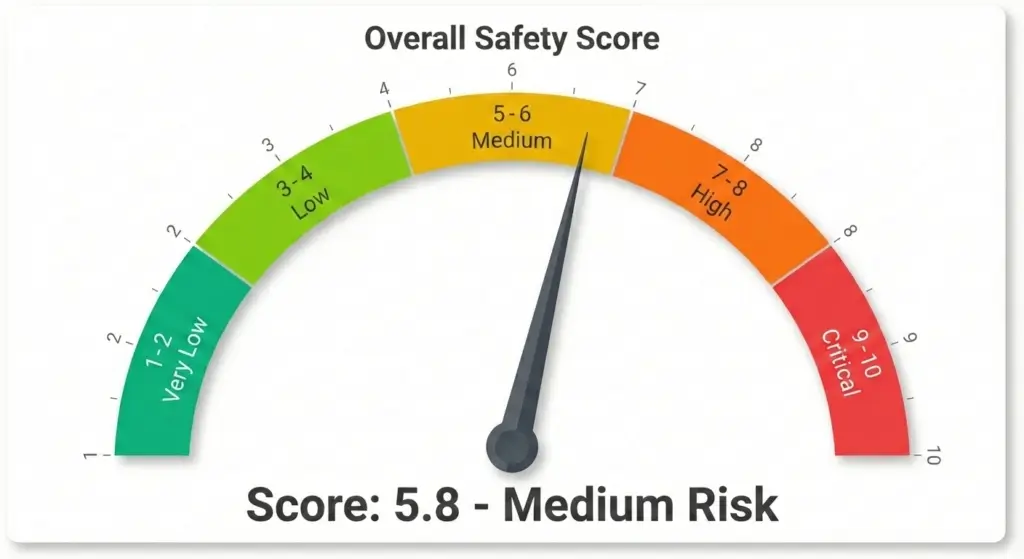
Risk Description
- 1-2: “The water quality in your area has very low risk.”
- 3-4: “The water quality in your area has low risk levels.”
- 5-6: “The water quality in your area carries a medium level of risk.”
- 7-8: “The water quality in your area has high risk levels. Caution advised.”
- 9-10: “The water quality in your area has critical levels of risk.”
Data sourced from: [authority_name]
Detected Contaminants
Escherichia coli (E. coli)
E.coli levels slightly above recommended limits.
Web Designer
50%
A bacterium found specifically in the gut of warm-blooded animals. Its presence in water is a direct indicator of recent fecal contamination and poses a significant risk of gastrointestinal illness.
Primary sources are human sewage and animal feces. In urban areas, contamination often stems from leaking sewer pipes or stormwater runoff causing overflow events. In regional and remote Australia, the main risks are failing septic tanks leaching into groundwater bores, or livestock manure washing into surface dams and creeks after heavy rainfall.
Consuming water contaminated with E. coli can lead to severe abdominal cramping and bloody diarrhea, but the most critical risk is Hemolytic Uremic Syndrome (HUS), a type of kidney failure that can be fatal. Infants and young children are disproportionately vulnerable to this rapid dehydration and organ shutdown. The severity of this contamination was tragically demonstrated in the Walkerton outbreak, where municipal water contamination resulted in multiple deaths and lifelong health complications.
• Boil Water: Heating water to a rolling boil for one minute kills E. coli and other pathogens, making it safe to drink. This is the most reliable emergency method.
• Sub-Micron Mechanical Filtration: Use a water filter certified to have an absolute pore size of 0.5 microns or less (ideally 0.2 microns). This physically blocks and removes bacteria. Look for filters certified under NSF P231 (Microbiological Purifier) for the highest level of assurance.
• Reverse Osmosis (RO): This advanced filtration method uses a semi-permeable membrane with extremely small pores to remove bacteria, viruses, and a wide range of other contaminants.
• UV Disinfection: High-intensity UV light scrambles the DNA of E. coli, rendering it unable to reproduce or cause infection. It sterilises the water but does not physically remove the bacteria.
• Chlorination: Adding a specific amount of unscented household bleach disinfects water by destroying the bacteria’s cell walls. This is a common method for emergency disinfection of larger water volumes.
Fluoridation Status
Fluoridated: YES
Type: Sodium Fluoride
Why It Is Added
Health Effects
Why It Is Added
Fluoride is added to public water supplies to improve dental health. It works by rebuilding and strengthening the tooth’s enamel (the outer protective layer), making it more resistant to decay and cavities caused by acid and bacteria.
Health Effects
- Dental Fluorosis: Ingestion of high fluoride levels during childhood (while teeth are forming) can cause visible white spots or streaking on the enamel. Severe cases can lead to pitting and discoloration.
- Skeletal Fluorosis: Long-term excessive exposure can lead to a bone disease known as skeletal fluorosis, resulting in pain and damage to bones and joints, and calcification of ligaments.
- Neurodevelopmental Concerns: Recent toxicological reviews have suggested a potential association between high prenatal/childhood fluoride exposure and reduced IQ, though this remains a subject of ongoing high-priority research.
- Thyroid Function: Some studies indicate that high fluoride intake may suppress thyroid function, potentially contributing to hypothyroidism in iodine-deficient populations.
Disinfection Status
Disinfectant Detected
Type: Chlorine
Why It Is Added
Health Effects
Why It Is Added
Chlorine is a potent disinfectant added to kill harmful bacteria, viruses and parasites. It provides a ‘residual’ effect, meaning it stays in the water as it travels through pipes to prevent re-contamination before it reaches your tap.
Health Effects
- Carcinogenic Risks: Long-term exposure to high levels of Trihalomethanes (THMs)—a by-product formed when chlorine reacts with organic matter—has been linked to an increased risk of bladder and colorectal cancers.
- Reproductive Issues: High-level exposure to disinfection by-products (DBPs) has been associated in some epidemiological studies with adverse reproductive outcomes, such as low birth weight or fetal growth restriction.
- Liver and Kidney Effects: Animal studies on Haloacetic Acids (HAAs), another common by-product, indicate potential toxicity to the liver and kidneys at high doses.
PFAS Status
PFAS (Per- and polyfluoroalkyl substances) are a group of thousands of man-made chemicals, including PFOA, PFOS, PFHxS, and GenX. They are known as "Forever Chemicals" because they contain a carbon-fluorine bond—one of the strongest in chemistry—meaning they do not break down naturally in the environment or the human body.
Your Reading vs. The World
 User’s Reading: [Insert User Value] ppt (parts per trillion)
 Australia (NHMRC) Guideline: 70 ppt (PFOS + PFHxS) / 560 ppt (PFOA)
 US EPA Enforceable Limit: 4.0 ppt (PFOA & PFOS)
 EU Drinking Water Directive: 100 ppt (Sum of 20 PFAS)
Sources
Entry
Health Effects
Sources
They have been used since the 1940s in non-stick cookware (Teflon), stain-resistant fabrics, water-repellent clothing, and specifically in fire-fighting foams.
Entry
PFAS enter the water supply through industrial discharge, runoff from military bases or airports (where fire-fighting foam was used), and leaching from landfills into groundwater aquifers.
Health Effects
- Immune System Suppression: Studies suggest PFAS accumulation can reduce the immune system’s ability to fight infections and reduce the effectiveness of vaccines in children.
- Cancer Risk: The IARC has classified PFOA as “carcinogenic to humans” (Group 1) and PFOS as “possibly carcinogenic” (Group 2B), with links specifically to kidney and testicular cancer.
- Developmental Effects: Exposure during pregnancy is linked to low birth weight, accelerated puberty and skeletal variations.
- Source: U.S. EPA – PFAS Health Effects
- Cholesterol Elevation: Consistent epidemiological evidence links higher PFAS blood levels with elevated cholesterol, increasing the risk of cardiovascular disease.
Heavy Metals
Heavy metals are naturally occurring elements that have a high atomic weight and density. While some are essential in trace amounts (like zinc), metals such as Lead, Arsenic, Mercury and Cadmium are toxic. They are monitored because they are non-biodegradable and bio-accumulate in the human body.
Sources
Health Effects
Sources
They enter water systems through the corrosion of aging household plumbing (Lead), natural erosion of mineral deposits (Arsenic), industrial waste discharge and mining operations.
Health Effects
- Neurological Damage (Lead/Mercury): Lead is highly toxic to the developing brain. Even low levels in children are linked to lower IQ, attention deficits (ADHD) and behavioral issues. Mercury exposure damages the central nervous system.
- Kidney Dysfunction (Cadmium/Uranium): Chronic ingestion of Cadmium accumulates in the kidneys, leading to renal tubular dysfunction and potential kidney failure.
- Source: CDC – Cadmium Toxicity
- Carcinogenicity (Arsenic): Long-term exposure to Arsenic in drinking water is causally linked to cancers of the skin, bladder and lungs.
- Cardiovascular Issues: Heavy metal exposure is increasingly linked to hypertension and cardiovascular disease in adults.
Microplastics
Microplastics are tiny plastic particles less than 5mm in diameter (roughly the size of a sesame seed or smaller). They are pervasive in global water cycles, found in oceans, rivers and treated drinking water.
Sources
Entry
Health Effects
Sources
They originate from the breakdown of larger plastic debris, microbeads in cosmetics, industrial pellets (“nurdles”) and extensively from synthetic fibers (like polyester) shed during washing clothes.
Entry
They enter water systems via wastewater treatment plants (which cannot filter out the smallest nanoplastics) and urban stormwater runoff.
Health Effects
- Inflammation and Cellular Damage: Studies on human cells demonstrate that microplastics can trigger oxidative stress, inflammation and cellular toxicity, potentially damaging tissues upon ingestion.
- “Trojan Horse” Vector Effect: Microplastics act as vectors; their surfaces attract and transport harmful bacteria, viruses and heavy metals, delivering these concentrated toxins directly into the body.
- Endocrine Disruption: Plastics contain chemical additives (like BPA and Phthalates). When ingested, these chemicals can leach out, interfering with the body’s hormonal systems.
- Bio-accumulation: Recent research confirms microplastics have been detected in human blood and placental tissue, suggesting they can cross biological barriers and accumulate in organs.
Pesticides
Pesticides are chemicals used to control pests, weeds (herbicides), and fungi.
Sources & Entry
Health Effects
Sources & Entry
The primary source is agricultural runoff. After rainfall or irrigation, pesticides applied to crops, golf courses or domestic gardens wash into creeks, rivers and groundwater aquifers that supply drinking water. Due to their chemical stability, substances like Atrazine and Simazine can persist in water for long periods.
Health Effects
- Endocrine Disruption (Atrazine): Atrazine is a known endocrine disruptor. It interferes with hormonal balance, specifically affecting the reproductive system and has been linked to menstrual irregularities and low birth weight.
- Cancer Links: Some herbicides (e.g., Glyphosate) are classified as “probably carcinogenic to humans” by international bodies, with specific links to Non-Hodgkin lymphoma.
- Neurotoxicity: Long-term exposure to organophosphate pesticides has been associated with neurological deficits and an increased risk of Parkinson’s disease.
- Developmental Delays: Prenatal exposure to high levels of agricultural pesticides is correlated with impaired cognitive development and motor skills in children.
- Source: American Academy of Pediatrics
Your Water Source
- Water Authority: (e.g., Sydney Water)
- Primary Source: (e.g., Warragamba Dam)
- Sample Date: (Date of last data ingestion)
Get Your Risk Report
You can download the full PDF report here. A copy has also been sent to [User_Email].
Fugit, sed quia consequuntur magni dolores eos qui ratione voluptatem sequi nesciunteque porro quisqu dolorem ipsum quia dolo sit amet, consectetur, adipisci…
Fugit, sed quia consequuntur magni dolores eos qui ratione voluptatem sequi nesciunteque porro quisqu dolorem ipsum quia dolo sit amet, consectetur, adipisci…
Fugit, sed quia consequuntur magni dolores eos qui ratione voluptatem sequi nesciunteque porro quisqu dolorem ipsum quia dolo sit amet, consectetur, adipisci…
Sea at doctus virtute partiendo. Reque ubique ut duo, qui lorem quando antiopam ad, dicat probatus electram ad pri. Ius dolor virtute…
Sea at doctus virtute partiendo. Reque ubique ut duo, qui lorem quando antiopam ad, dicat probatus electram ad pri. Ius dolor virtute…
Sea at doctus virtute partiendo. Reque ubique ut duo, qui lorem quando antiopam ad, dicat probatus electram ad pri. Ius dolor virtute…
Sea at doctus virtute partiendo. Reque ubique ut duo, qui lorem quando antiopam ad, dicat probatus electram ad pri. Ius dolor virtute…
Sea at doctus virtute partiendo. Reque ubique ut duo, qui lorem quando antiopam ad, dicat probatus electram ad pri. Ius dolor virtute…
We often treat hydration as a simple input/output equation: drink water when thirsty, and the body handles the rest. But if we…